


We published this post at the end of May 2020, when the lockdown kept shops closed and social media was almost the only showcase a brand had. The question back then was whether it was worth continuing to post. The answer was yes: communicating helped brands stay close to their audience, stay remembered and keep interaction going.
We keep the tips and the real examples of those months, and we reviewed them in November 2026 to tell you what still works outside a quarantine.
In 30 seconds
- What this post is: three tips and eight marketing goals, with brand examples, for social media during the 2020 quarantine.
- The three tips: do not stop communicating, vary the type of content and keep the brand active.
- The examples: giveaways, games, tutorials, live streams and solidarity actions.
- What still holds: define the goal first and choose the format afterwards.
- Careful with giveaways: in Colombia promotional draws are regulated; check before launching one.
Tips for your social media strategy during quarantine
The first tip was not to stop communicating on social media. At that moment it was the only showcase brands had to reach their customers. It served to present new products, gain awareness, entertain the community or simply keep people company at a difficult time.
The second, diversify the type of content. A photo with a caption was no longer enough to capture attention: brands had to alternate video, carousel images, games and giveaways in which people could express themselves.
The third, that the brand should be active. Not only posting frequently, but also replying to comments, sharing content of interest by other companies or institutions, collaborating with solidarity causes and rewarding followers. Replying and talking is a task for those who know the business, that is, your team.
Examples of how brands use social media during quarantine
Many companies adapted their products, their services and their way of communicating to the lockdown. The examples below are real posts made in those months, mostly by brands in Spain, ordered by the marketing goal they pursued.
Goal 1. Presenting products on social media
Whether your sector was essential or not, social media served to present your products and remind people of store hours or shipping conditions. Giving away a batch of those products gave them more prominence.
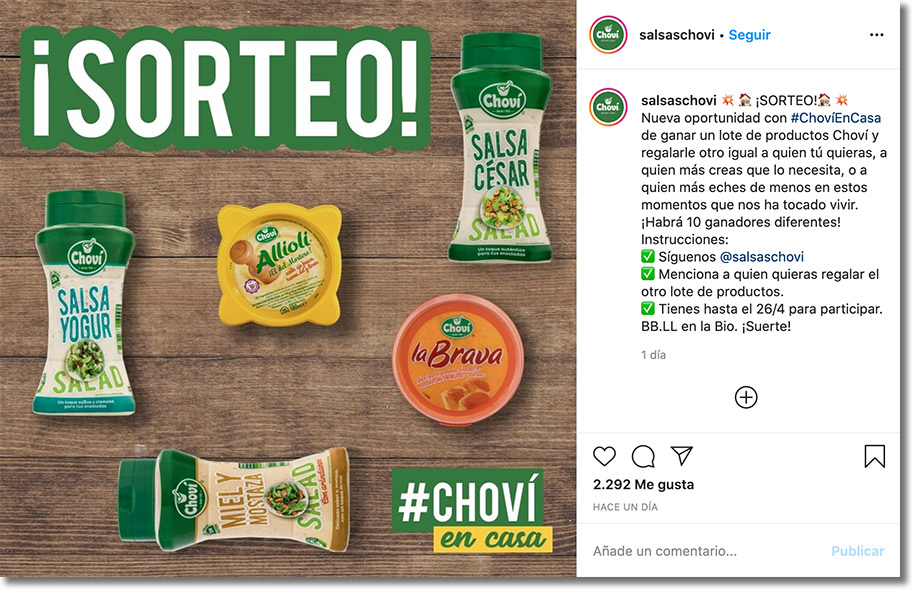
Salsas Choví presented its products with a solidarity giveaway on Instagram: whoever took part could win one batch for themselves and another for a person of their choice.
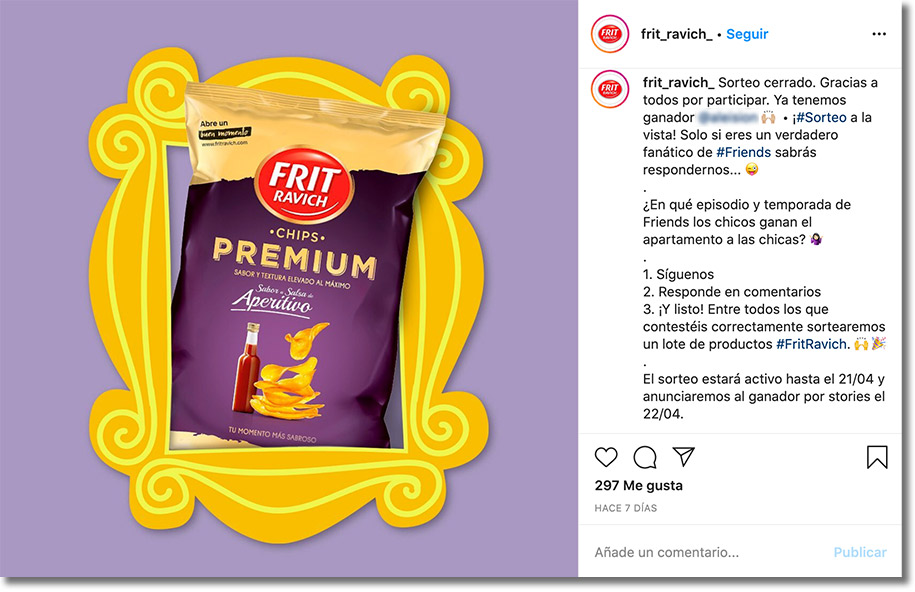
Frit Ravich asked a question about a TV series as the way to enter the giveaway of its product. Since people were at home watching more television and streaming platforms, the theme made the giveaway more interesting.
Goal 2. Humanizing the brand and giving encouragement in hard times
In a crisis people need support and small gestures. Brands could show their most human side and make it clear that nothing mattered more than wellbeing.
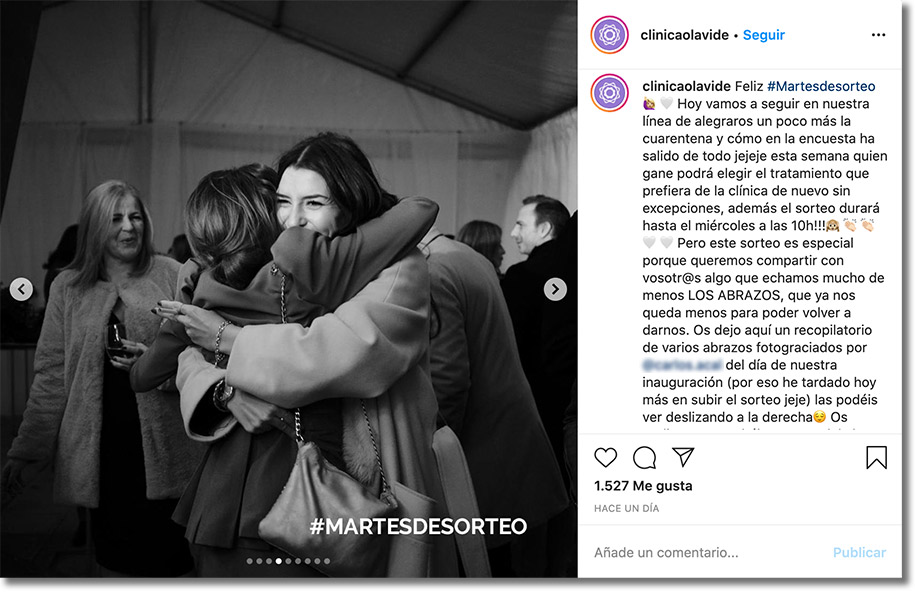
Clínica Olavide symbolically “gave away” hugs, with a carousel of images of that gesture we were all deprived of. To take part, it was enough to comment whom you would like to hug.
Goal 3. Promoting a service through social media
For service companies, with their activity reduced or stopped, it was the moment to rethink the format of the business: tidy up, make changes, renew the website, try new ways of communicating and, above all, stay active on social media.
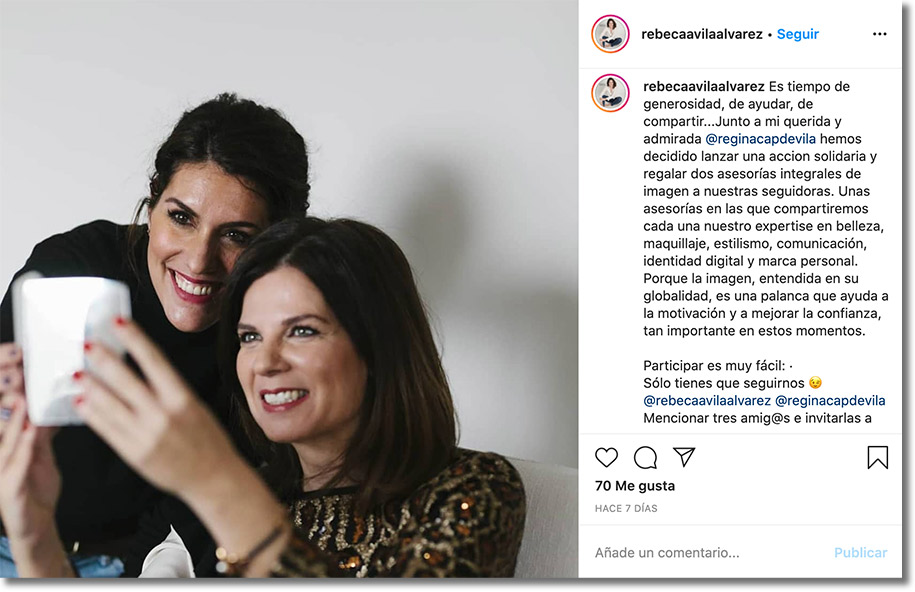
In this example, a group of image consultants joined forces to give away consultations that would take place once the lockdown ended. This way they reminded people of their services and kept their businesses in mind.
Goal 4. Interactive campaigns to entertain
Games were a good way to entertain: they let you expose the brand and present a product while people have fun, and they allow challenges such as “who will be the fastest?”.
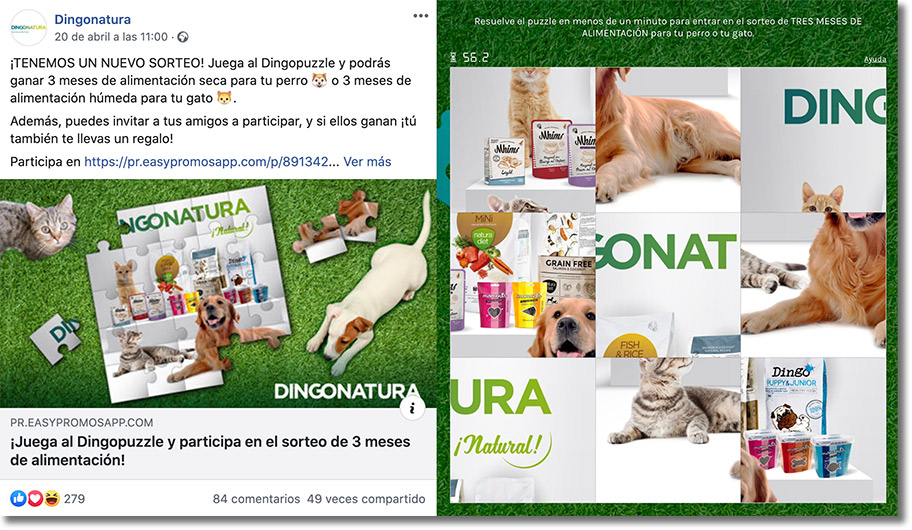
Dingonatura published a puzzle that, besides showing its products, aimed to keep the brand in the mind of the consumer.
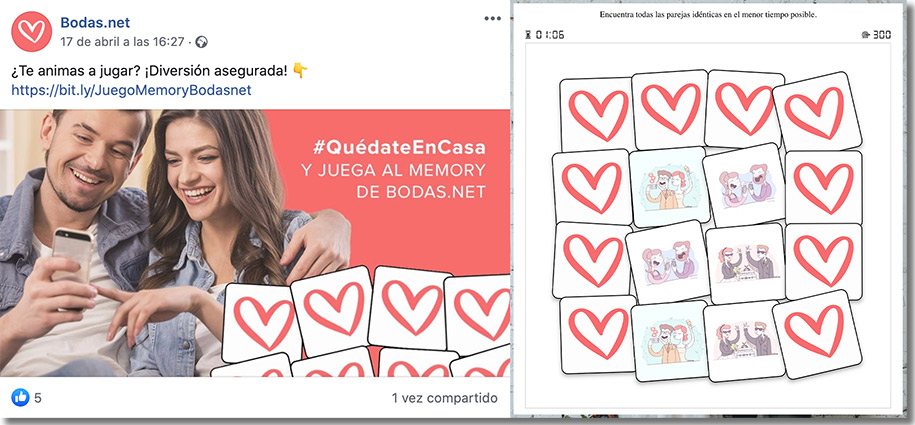
Bodas.net shared a memory game on Facebook to entertain its followers.
Goal 5. Educating and training on topics related to the brand
Teaching also changed: it moved to a fully online model after being almost entirely face-to-face. Schools and professionals began to give their classes through a screen. The post showed three different ways of doing it.
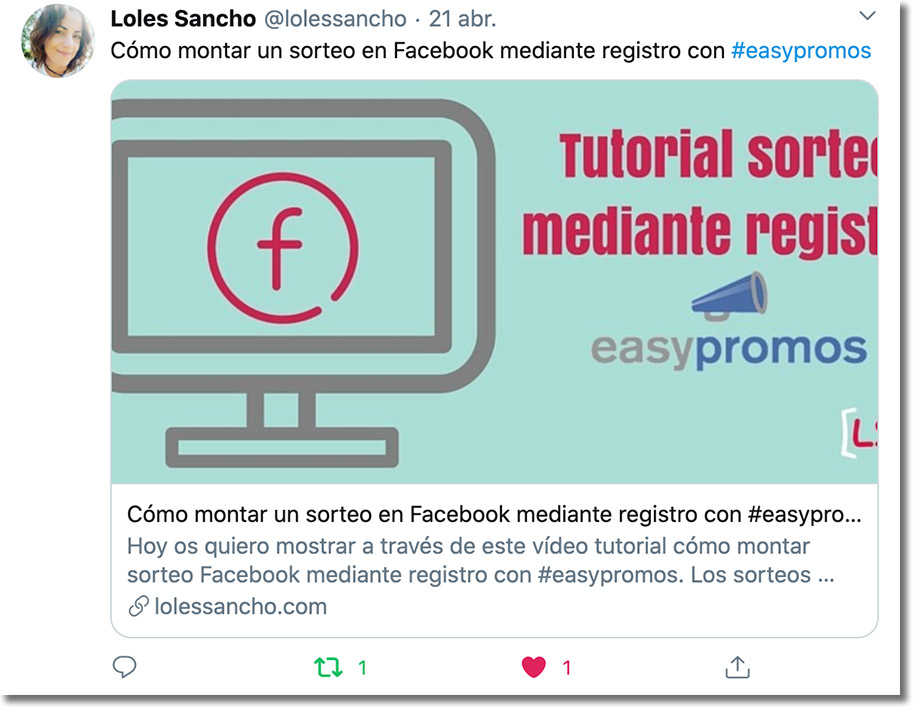
The first, tutorials. Digital marketing consultant Loles Sancho fed her social media with tutorials about marketing platforms and tools.
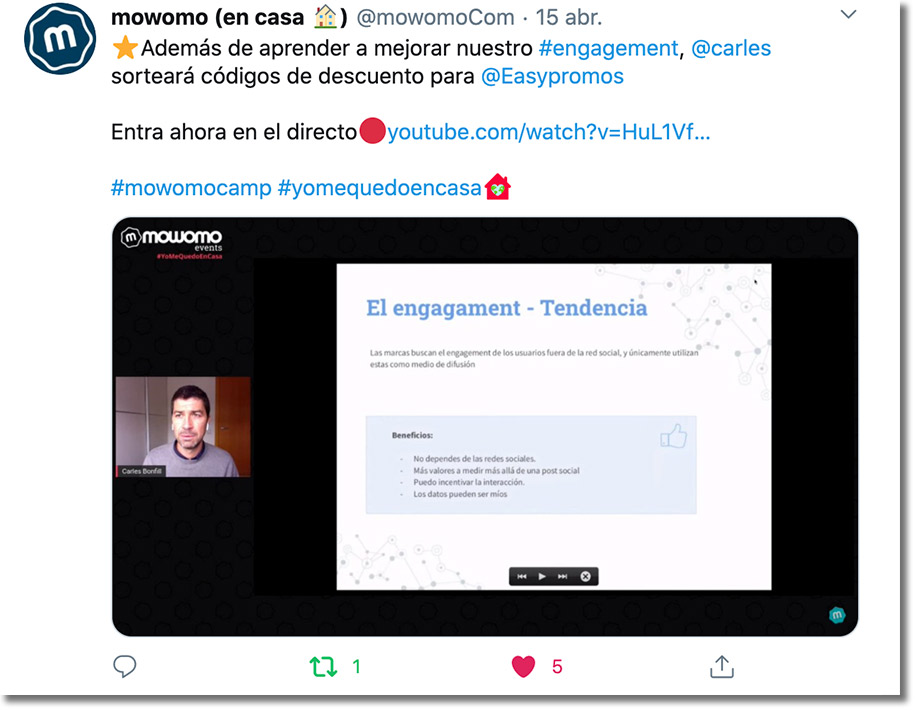
The second, webinars or online classes. Networks such as Facebook and YouTube let you broadcast live and share your screen. The recommendation was to prepare the content, outline the talk and invite people through social media with the day, the time and the channel. Mowomo, a consultancy specialized in WordPress, organized an online event with several webinars over a month and gave away discount codes among attendees through a registration form, which also let it learn the profile of the audience.
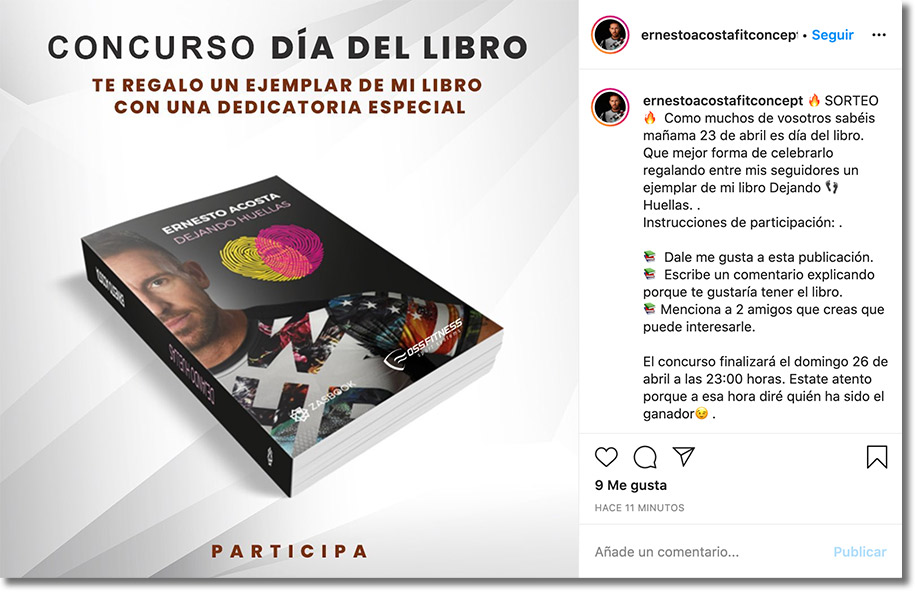
The third, taking advantage of a special date. On Book Day, author Ernesto Costa promoted his book by giving away a copy among those who commented on the post.
Goal 6. Encouraging engagement on social media
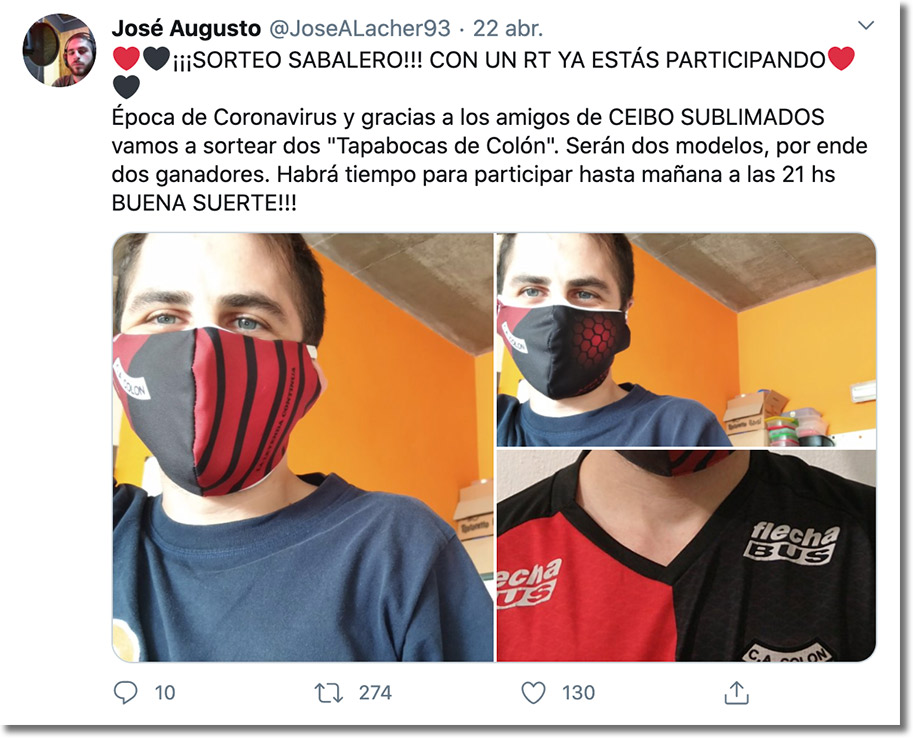
During a quarantine it was very important to keep in touch with users and learn their opinion. Interaction helps build trust between the brand and people. Sometimes it arises by itself, when the content is liked; other times it has to be prompted, as in this giveaway on Twitter (now X) to win a mask.
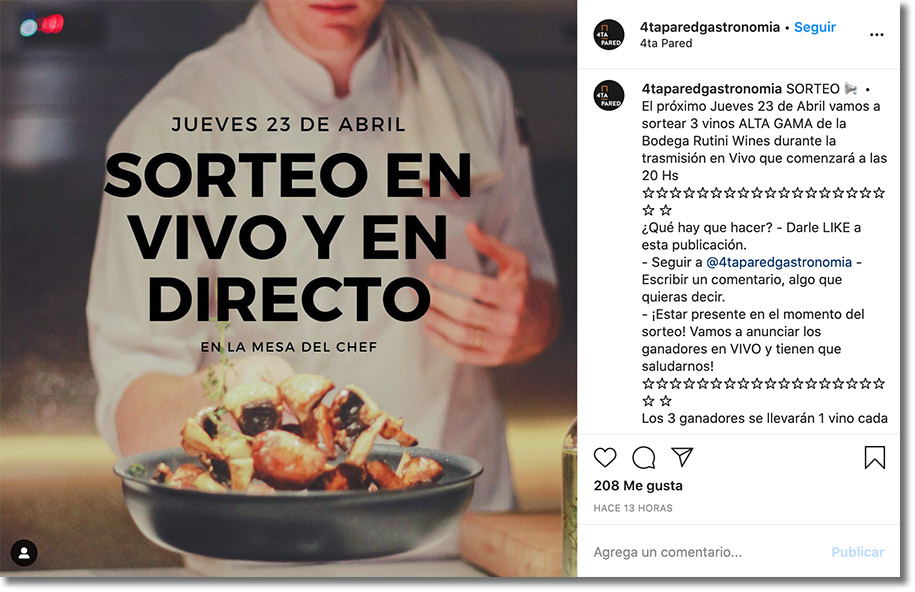
Live streams became the format of the moment: an easy, direct way to talk with the audience. To stand out among so many, some brands ran live giveaways.
Goal 7. Showing brand values, especially solidarity
Every brand has its values and it is worth remembering them: respect for people, transparency, good customer service, deliveries on time. During the quarantine, the most appreciated one was solidarity.
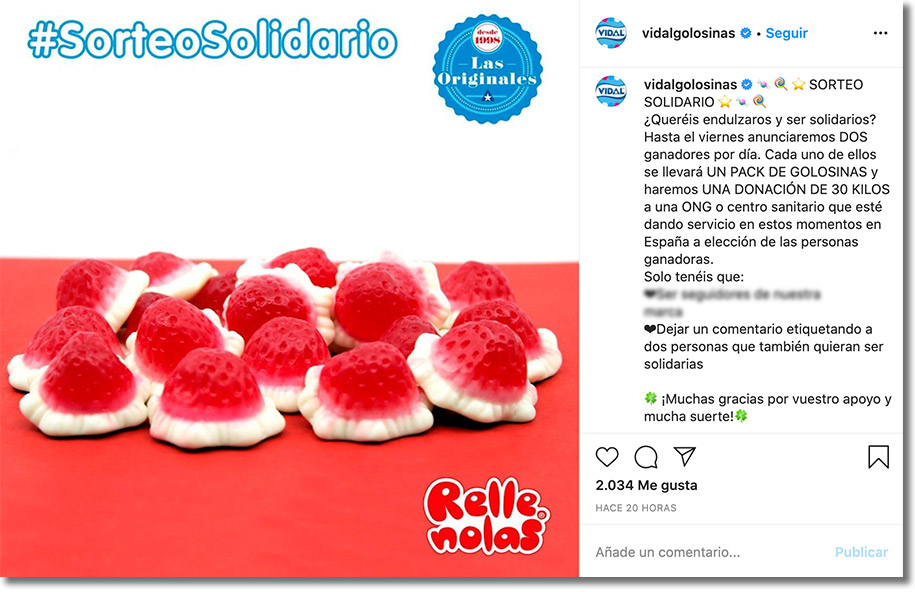
Vidal Golosinas gave away two packs of sweets a day and, for each winner, donated 30 kg of product to an NGO or a health center. This way it committed its followers to the cause.
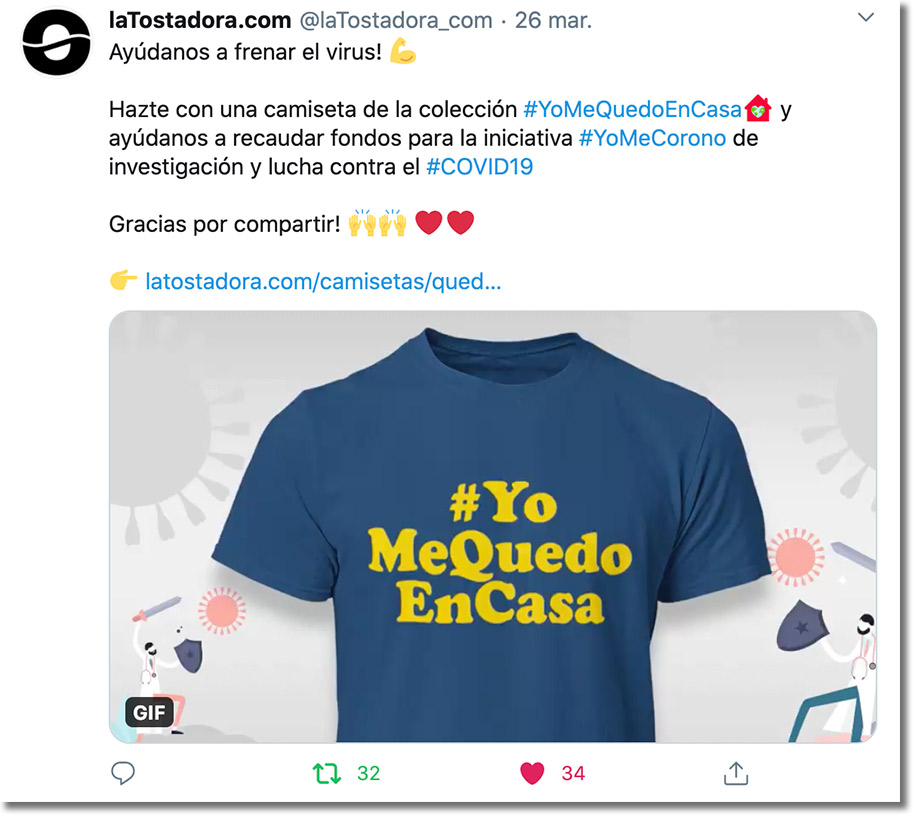
La Tostadora launched a special edition of T-shirts to raise funds for the #YoMeCorono initiative, for research against COVID-19: it allocated 5 euros per T-shirt.
Goal 8. Boosting brand awareness looking to the future
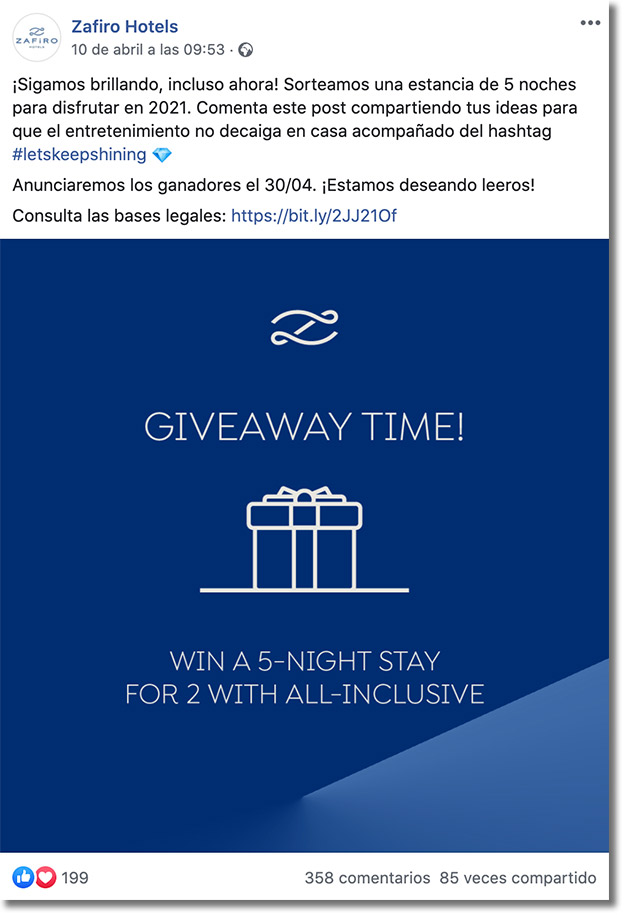
The last goal looked ahead. People longed for normal life, and a brand could reward that hope by giving away its product for later. This kept followers attentive to the moment it resumed its activity, as Zafiro Hotels did.
What still holds
The most useful part of this post is not the formats but the order: first the goal and then the action. That logic works just as well outside an emergency.
| In the 2020 quarantine | Today |
|---|---|
| Social media was the only showcase | It is one channel among several. According to DataReportal, in October 2025 Colombia had 37.7 million social media user identities, 70.4% of the population. |
| Live streams and webinars | They stayed as a regular format for teaching and presenting products. |
| Giveaways to gain interaction | They still work, with clear rules and within the law of each country. |
| It has been called X since July 2023. | |
| Solidarity actions | They are worth it when they are real and the brand delivers what it announces. |
Before running a giveaway in Colombia: promotional games are regulated by Law 643 of 2001 and, depending on the case, require prior authorization by Coljuegos or the departmental entity. The examples in this post come out of Spain, which has different rules. Check the procedure before publishing the mechanics.
What it means for your company
If you are going to plan your posts, use the eight goals as a starting list:
- Choose one goal per campaign. Presenting a product, teaching or gaining awareness call for different formats.
- Decide how you will measure it. Comments, sign-ups, visits to the site or sales, depending on the goal.
- Take people to a channel you own. A form or a page on your site leaves you the data of those who take part, with their authorization.
- Use ads to widen the reach. A good post travels further with paid promotion aimed at your audience.
That last part is what we work on in our digital marketing service: strategy, campaigns on Meta Ads and Google Ads, and measurement. The daily conversation with your followers remains with your team; the ad plan is what takes it to more people.
Frequently asked questions
What did brands do on social media during the quarantine?
They kept posting with other formats: giveaways, games, tutorials, live streams and solidarity actions, each one tied to a marketing goal.
What goals can a social media campaign have?
Presenting products, humanizing the brand, promoting a service, entertaining, educating, encouraging interaction, showing brand values and gaining awareness.
Can I run giveaways on social media in Colombia?
Promotional games are regulated by Law 643 of 2001 and, depending on the case, require prior authorization by Coljuegos or the departmental entity. Check the procedure before launching one.
Do live streams still work?
Yes. They stayed as a regular format for teaching, presenting products and answering questions asked by the audience.
How do you measure a social media campaign?
With the indicator that matches the goal: comments and interactions for participation, sign-ups for capturing contacts, visits and sales when the aim is commercial.
Do your posts have a goal and a way to measure it?
Tell us what you want to achieve on social media and let us talk about an advertising strategy.
Let us talkKeep reading
Sources: DataReportal, Digital 2026: Colombia · Law 643 of 2001 (games of chance, Colombia). The original tips and examples were taken out of a 2020 article by Easypromos, which we adapted and reviewed. Example images: Easypromos. Post published in May 2020 and reviewed in November 2026.



